SweetLight History

We were students with a small collection of lighting and sound equipment, and we started organizing wedding parties to earn some money. Our real passion, however, was computer programming and electronic design

1989 - 0 to 10 Volts

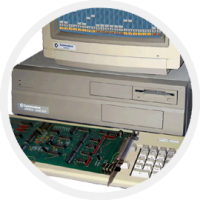
The first multitasking computer arrives – the Commodore Amiga, capable of true multitasking with only 256 KB of RAM.
With this outstanding machine, we design our first printed circuit boards featuring 0–10V outputs to control our lighting equipment.

1994 - DMX512

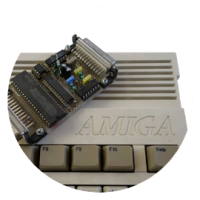
A new, more compact generation of Commodore Amiga appears, and a new lighting communication protocol is born: DMX512.
We develop our first compact parallel-port to DMX512 interface.

2000 - Windows

Microsoft Windows becomes increasingly dominant, while the Commodore Amiga disappears from the market.
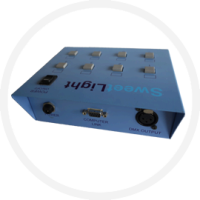
We release our first Windows 98 lighting control software, and in parallel develop a serial-port to DMX interface with standalone capability — allowing a PC-programmed lightshow to run without a computer for the first time.

2005 - USB

USB technology becomes reliable thanks to Windows XP.
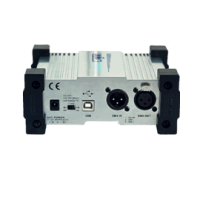
We release our first USB-to-DMX interface, the now-famous SweetBox.

2009 - Macbook

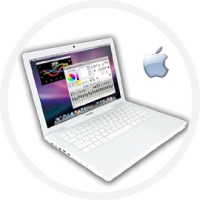
Times change again. Apple returns strongly with Intel-based MacBooks, using the same processors as Windows PCs.
We introduce our first multi-platform lighting software, compatible with both Windows and macOS.

2016 - Ethernet

IP-based devices are everywhere, and Ethernet becomes standard.
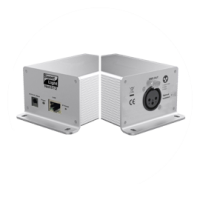
We launch a standalone Ethernet-to-DMX interface with an embedded web server.
For the first time, you can control your lightshow from your smartphone, from anywhere, without a computer.

2025 - Android & iOS

Today, we control everything from our smartphones.
Our new V_II software runs on Windows, macOS, Linux, Raspberry Pi, Android, and iOS.
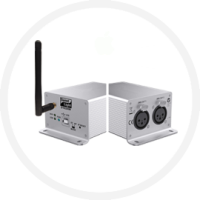
Our latest interface offers both USB-to-DMX and WiFi-to-DMX.
A dedicated Android & iOS application also lets you trigger standalone scenes stored inside the interface.